Private AI-native CMS and secure MCP control plane for portfolio content, assistant operations, agent access, security, and runtime management.
- Role
- Product Designer & Full-Stack Engineer
- Client
- Personal Platform
- Year
- 2026
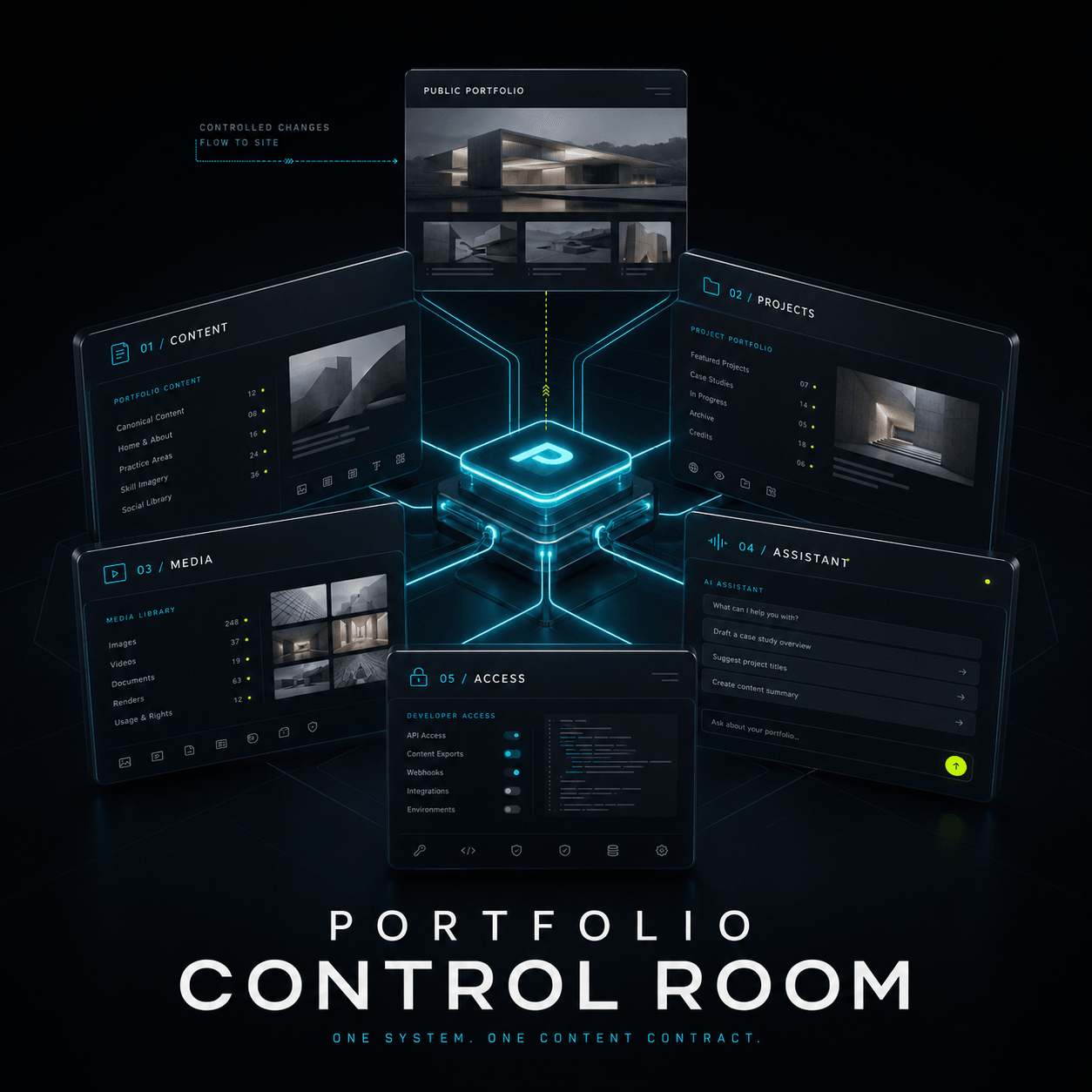
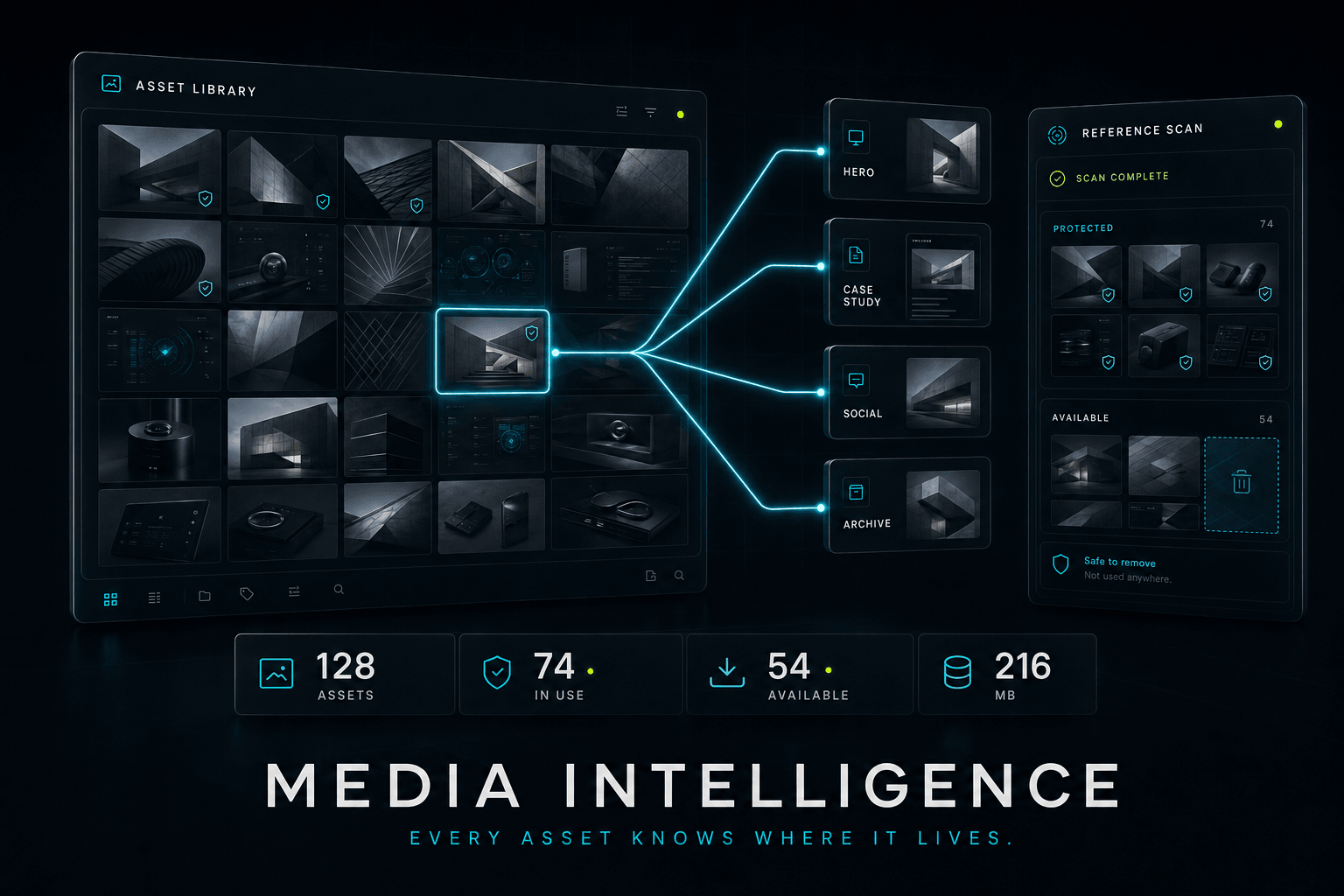
Ali Saad Portfolio Control Room is the private operational layer behind the public portfolio. It brings content editing, project publishing, media management, runtime controls, contact workflows, and visitor-assistant configuration into one authenticated product rather than scattering them across database tables and deployment settings.
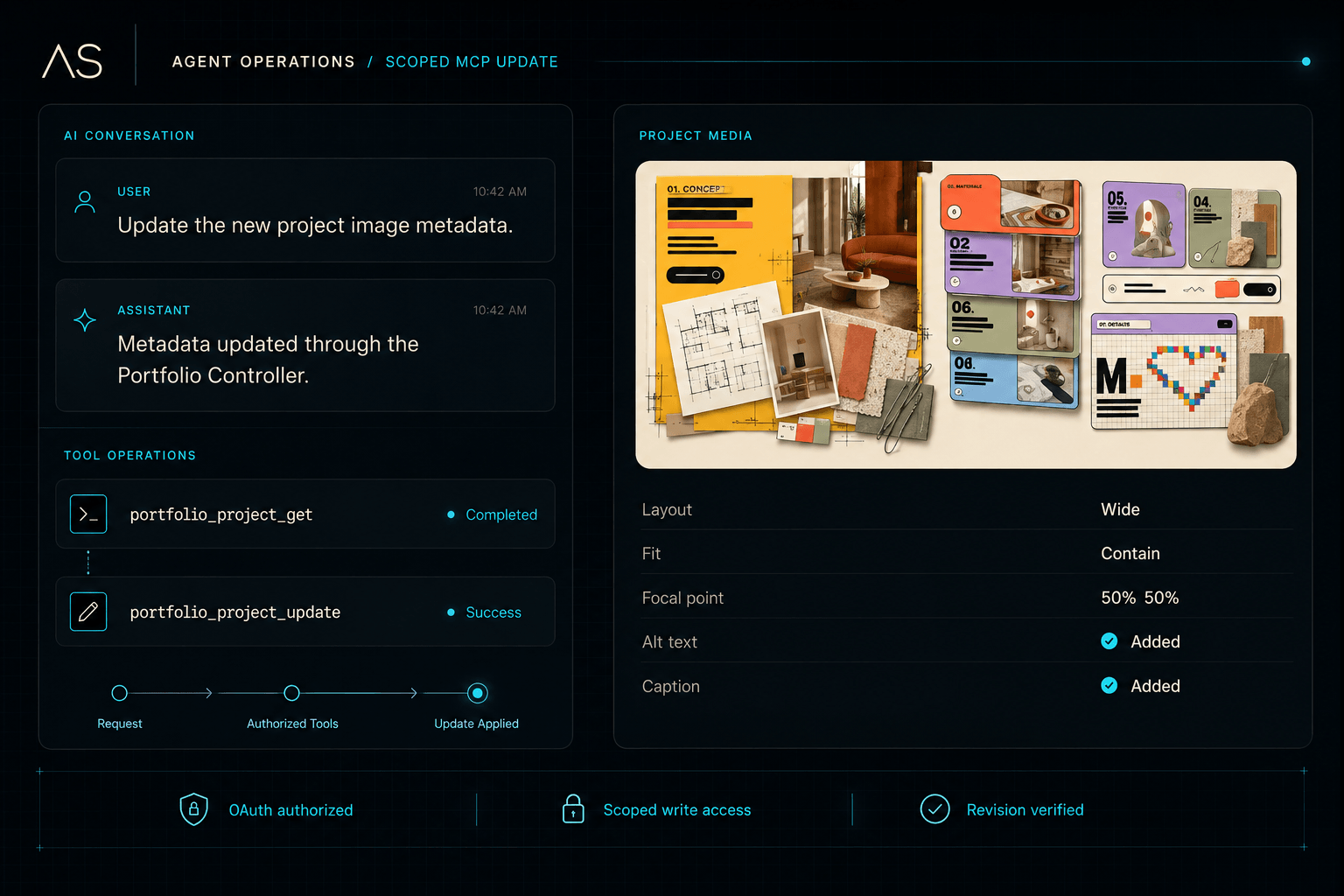
The system also exposes a deliberately scoped Model Context Protocol control plane. Approved AI clients can inspect or update permitted portfolio surfaces through OAuth-authorized tools, while revocation, credential scopes, optimistic concurrency, rate limits, and sanitized activity logs keep the operator in control. Provider credentials and privileged configuration remain server-side.
The result is a portfolio that behaves like an operated digital product: its public experience, CMS, assistant, and agent interfaces share one content contract while preserving a strict boundary between public storytelling and private infrastructure.
The challenge
The main challenge was turning a portfolio CMS into a safe operational control plane without allowing public clients—or connected AI agents—to inherit administrator trust.
Public content, private credentials, operator settings, assistant behavior, and agent permissions therefore use separate contracts. Authorization is enforced server-side through authenticated functions, database policies, explicit scopes, revocation, validation, optimistic concurrency, and rate limits. The dashboard never needs to read privileged provider secrets back into the browser.
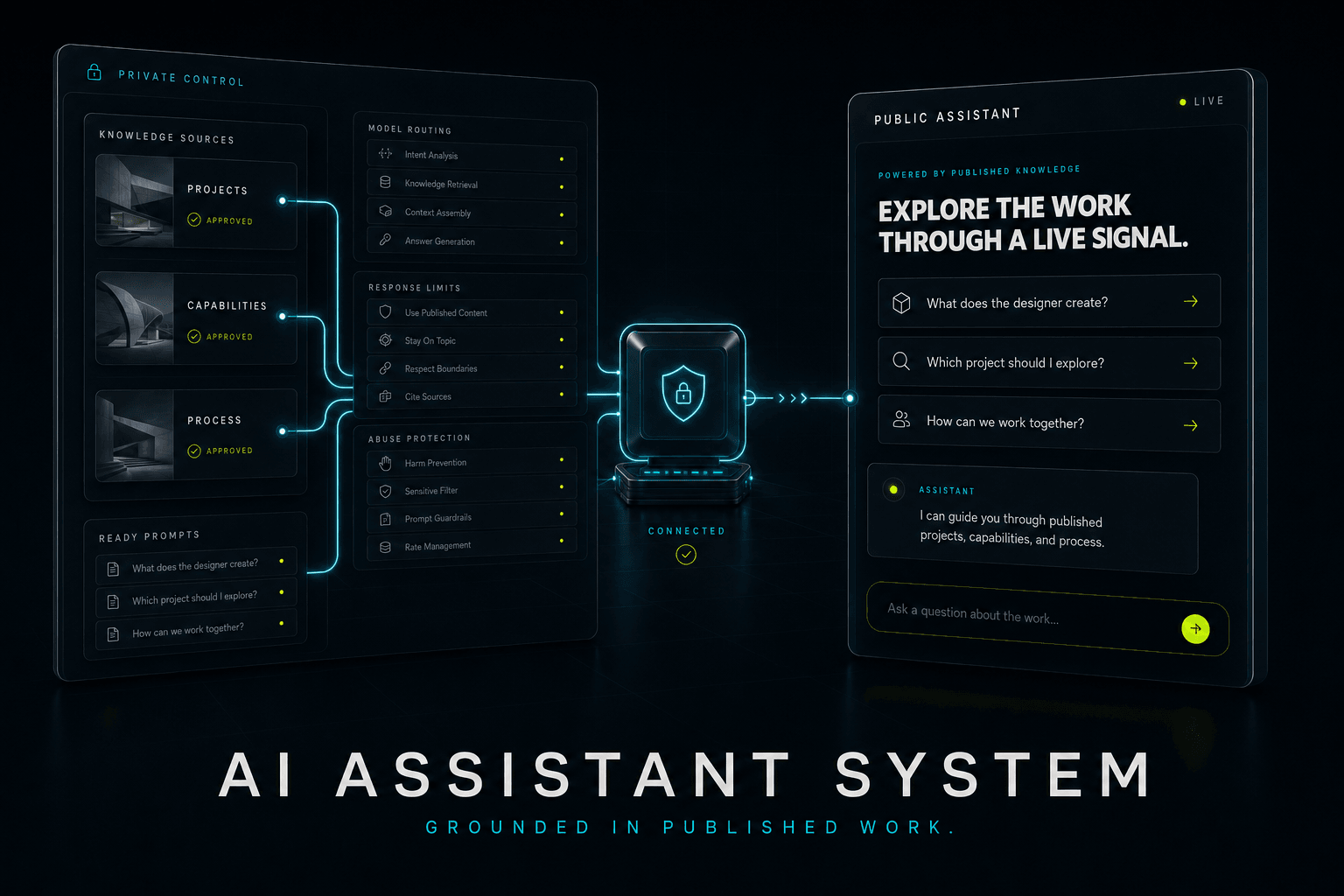
A second challenge was making the AI layer useful without letting it invent identity or cross project boundaries. The assistant receives published portfolio context through a versioned contract and immutable server policy, while structured responses allow project, navigation, contact, and external-resource cards without treating model output as trusted markup.
Single-Portfolio CMS
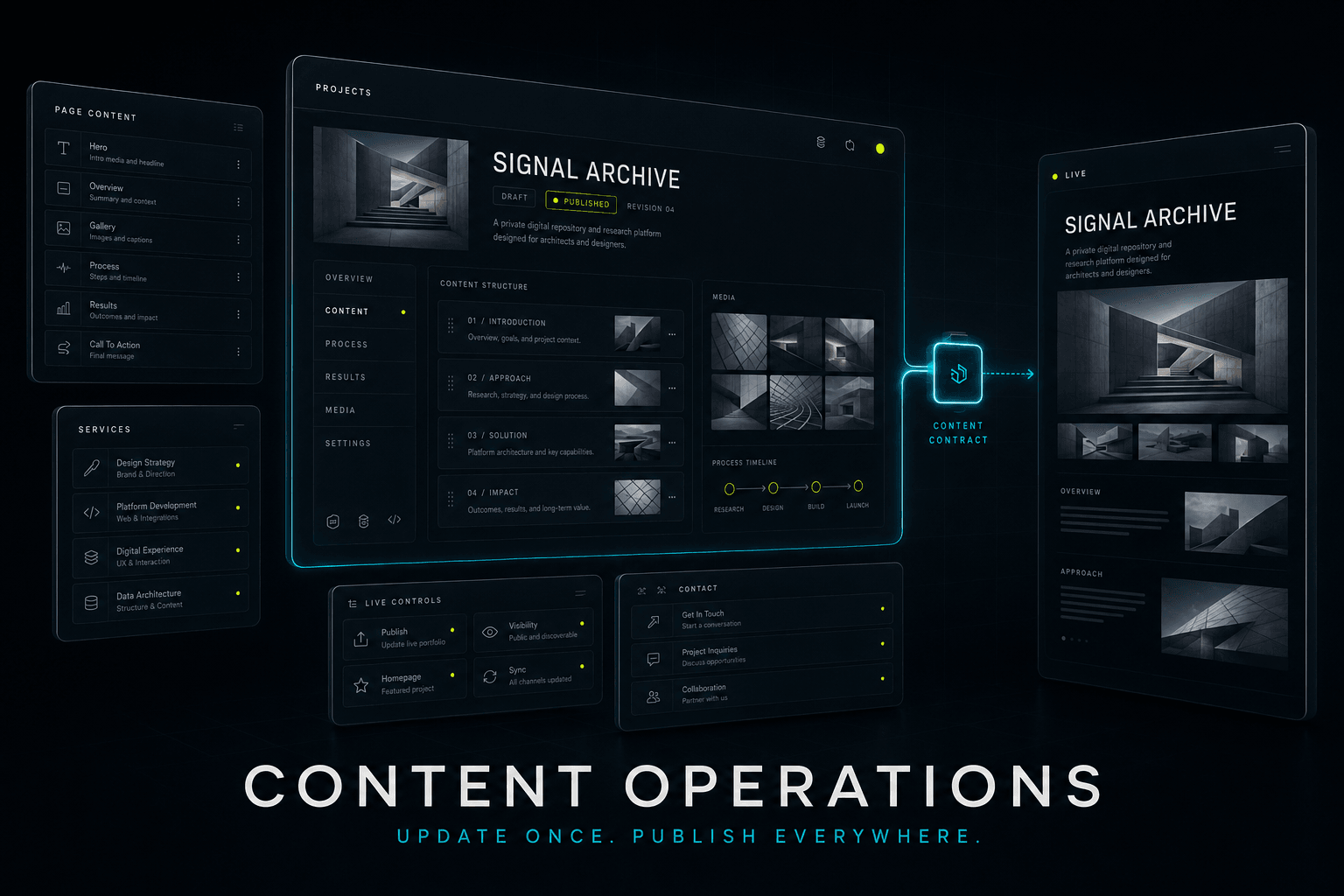
Authenticated editors manage page copy, projects, case studies, media, runtime settings, and publication state while the public portfolio consumes a narrow, presentation-safe content contract.
One canonical contract across public and private surfaces
OAuth MCP Control Plane
Compatible AI clients can receive carefully scoped read or write capabilities through OAuth. Credentials can be reviewed and revoked, and every supported operation remains constrained by server-side authorization.
Scoped tools with explicit operator consent
Assistant Operations
The dashboard manages the public portfolio assistant without exposing provider credentials to the browser. Published-only context, immutable identity rules, response limits, and safe rendering keep the experience grounded.
Behavior, knowledge, and routing controlled server-side
More details (3)
Security & Abuse Controls
Row-level security, privileged Edge Functions, request validation, private secret handling, origin controls, rate limiting, retention policies, and sanitized audit records protect both visitor and operator workflows.
RLS, scoped access, validation, rate limits, and revocation
Operational Visibility
The operator can review connected applications, issued credentials, tool activity, assistant state, runtime settings, maintenance mode, and content status from a coherent dashboard.
Credentials, activity, runtime state, and maintenance in one view
Retention Automation
Server-side retention rules and scheduled cleanup remove expired session and rate-limit records while keeping configuration and operational visibility under authenticated control.
Scheduled cleanup without exposing visitor content
The finished Control Room gives the portfolio one operational center for content, publishing, media, runtime behavior, assistant configuration, security controls, and authenticated agent access.
The public site remains presentation-focused, while private operations stay behind authenticated boundaries. AI clients can perform approved work through scoped tools instead of receiving broad database access, and the operator can inspect activity or revoke access from the same interface.
This turns the portfolio from a static showcase into an actively managed digital system while keeping sensitive URLs, credentials, infrastructure identifiers, and administrative entry points out of the public case study.
- Interfaces
- Private dashboard, public assistant, and scoped MCP tools
- Access Model
- Authenticated operator with explicit OAuth scopes
- Security
- RLS, private secrets, validation, rate limits, and revocation
- Operations
- CMS, runtime controls, audit visibility, and retention automation
- Delivery
- Solo product design, engineering, and deployment